Blackjack History
Last Updated: July 31, 2026 Written By Fact checked by
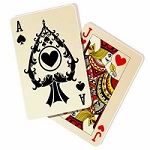 Blackjack history is rich and interesting. The inventor of games is often disputed due to casual record-keeping and inventions happening simultaneously. Like many gambling and casino games, blackjack history is associated with Frenchmen and French casinos.
It is also believed to have been the blend of two games. After various iterations, the game became known as Blackjack or 21 around the mid- to late 1700s.
Almost a century later, the game arrived in the United States, becoming an instant success with players and professional gamblers. Original versions of the play gave priority to a player holding the Jack or Ace of spades, which paid the player at a ten-to-one level. This was later changed to the game commonly played now.
The goal of the game is to have a set of cards that add up to the number 21, either with a face card and an ace or with any other combination of numbers that mathematically total to 21.
Continue reading for more blackjack history facts, and sign up to play at any of our online casinos below.
Disclaimer: The legal gambling age in the United States is 18+ or 21+, depending on local regulations. Show more
Always check and follow the online gambling laws in your state before playing. Gambling carries risks and can be addictive—please gamble responsibly and seek support if needed. Some of the recommendations on US Player Check may include affiliate links. This means we could earn a commission if you sign up or deposit through these links, at no extra cost to you. All reviews and guides follow our strict editorial process and rating standards, which you can learn more about on our how we rate page. For complete details on how we work with partner brands, please review our affiliate disclosure.
If you have questions, concerns, or feedback, please don’t hesitate to contact our team.
History of the Blackjack Card Game
In the blackjack game, historically and now, players place their bets on the game, and then each player, as well as the dealer, gets two cards, with one displayed and the other card not displayed.
Players add the value of the cards in their hands to determine the total number; if the number is less than sixteen, the player can ask for another card, which is displayed until they decide to throw in their cards because the count is over 21, or they can stand or hold if the count is 21 or under.
The dealer’s hand is taken into consideration regarding who wins, as the dealer can bust or exceed 21. The player with the best hand of 21 or fewer wins, and payouts are almost double for a total of 21.
Blackjack History Facts
We know that blackjack was first invented around the mid- to late 1700s. And we’ve discussed much of its origins in our introductory paragraph.
But the dynamics of the game have advanced over the years, and this section speaks to that period. The first shift towards a new era for blackjack games started around 1930.
1931: The Opening of the First Casino – Las Vegas, as we know it, is one of the gambling hotspots in the USA. And it’s no surprise that the first-ever casino was opened there in 1931. The act of gambling was outlawed in the United States for a very long time.
Gambling was seen as a disruption to local morale. This led to people hiding their gambling habits by creating underground establishments, which were often controlled by criminals.
The government saw the negative effects of the outlawing of gambling and decided to permit gambling by law in the state of Nevada in 1931. New laws were also passed at this time that would protect gamblers. The first gambling casino was then opened that same year, and its popularity spiraled from there.
But, with the new popularity came the need to establish a body to regulate the growing industry. The Nevada Gaming Commission was then founded for that exact reason.
1931 and Beyond – Gambling became legal in several other states in later years. It also prompted the development of a mathematical strategy to give players a better chance of beating the casino.
A writer named Roger Baldwin developed the strategy and published his work in a gambling newsletter, along with other experts building upon the theory by adding the idea of card counting, as well as other tricks.
A book was published by one of the theorists and became a huge hit with players, but was unwelcome by the casinos. Casino owners were unhappy with the spreading theories and began to add multiple decks to the game to deter card counting, as well as more shuffling during gameplay.
Card games are critical to the success of casinos, with payouts ranging up to 150%. Players are always looking for ways to improve the odds and casinos are always making sure the odds are in their favor.
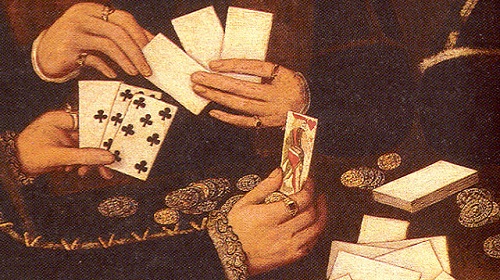
1978: A New Gambling Destination is Discovered – Almost 60 years after the first casino opened in Nevada, Atlantic City, New Jersey, became the second destination to jump on this trend. It too became a big gambling destination in America. Resorts International was the company to open the second casino on the East Coast. Blackjack was one of the famed games played at the venue.
1980s: Other states had legalized gambling – In the late 1980s, two other states legalized blackjack, along with hundreds of casino establishments online, abroad, and across the U.S. There are many other popular gambling locations in the south and west, including Native American reservation operations.
Other top gambling spots are France, Monaco, and Canada, as well as large cities in the U.S. Blackjack tables are abundantly available at all of these locations.
Online Blackjack History
The move from land-based gambling was indeed a major event and turning point for the industry. About 18 years after Atlantic City opened its first casino, the world of online gaming happened.
People were now able to play blackjack online! At land-based casinos, only the classic version of the game is made available.
But the invention of online gaming made it possible for other variations to come about. Versions like double attack blackjack, blackjack switch, and 21 duel then surfaced. Today, casinos have a lot more exciting blackjack variants for players to choose from.
Being able to play blackjack online was great. But the new challenge became how to create the same atmosphere players would experience in a casino venue online.
That’s where live blackjack games came about. It brought the casino into your living room. Games were initially streamed from the casino floor, which was a bit shaky, and the quality wasn’t always the best.
A turning point happened in 2006, though, when studios were built specifically for live dealer games like blackjack live dealer games. The overall quality of the interaction improved, and communication between player and dealer also greatly improved.
What Kind of Blackjack History Will Be Made in the Future?
So, now that we’ve gone through blackjack history, the question becomes, what’s next? When blackjack first came on the scene, it was arguably the most played casino game.
Craps came a close second back then. But casinos have since expanded and now offer many other games, which have come to challenge online blackjack’s dominance.
Blackjack history still remains rich, though. And it is still an absolute casino favorite today. Mobile blackjack games are perhaps the latest, but there’s no telling what the future holds.
Players have a wide range of blackjack games to enjoy, on more platforms than before and in more variations than before.
You can also make a lot of money playing real money games on the internet. What we do now is wait in anticipation to see what technology offers us next.